Why Education Matters
Education is one of the most powerful drivers of human development. It expands opportunities, reduces poverty, strengthens communities and lays the foundation for lifelong learning, productive employment and active citizenship.
Across Africa, significant progress has been made in increasing school enrolment. However, millions of children and young people continue to face barriers to accessing quality education. Many schools lack adequate infrastructure, learning materials and trained teachers, while disparities related to gender, disability, geography and socioeconomic status continue to affect educational outcomes.
At the same time, rapidly changing labour markets require learners to develop practical skills, digital literacy, critical thinking and adaptability alongside traditional academic knowledge.
Amani Global Foundation believes education should prepare individuals not only to succeed in school, but also to thrive throughout life.
Our Vision
Every child, young person and adult has equitable access to quality education, relevant skills and lifelong learning opportunities that enable them to contribute meaningfully to their communities and achieve their full potential.
Our Objectives
We seek to:
- Improve equitable access to quality education.
- Support learning environments that are safe, inclusive and conducive to success.
- Strengthen teacher capacity and educational leadership.
- Expand access to technical, vocational and digital skills.
- Promote innovation in teaching and learning.
- Increase opportunities for marginalized learners.
- Support lifelong learning for youth and adults.
At a Glance — Our Priority Areas in Education
- Early Childhood Development — Building strong foundations through community-based learning and school readiness.
- Primary and Secondary Education — Improving access to quality schooling, infrastructure and teacher development.
- Technical and Vocational Education (TVET) — Equipping young people with practical, job-ready skills.
- Digital Learning — Promoting digital literacy and equitable access to technology-enabled education.
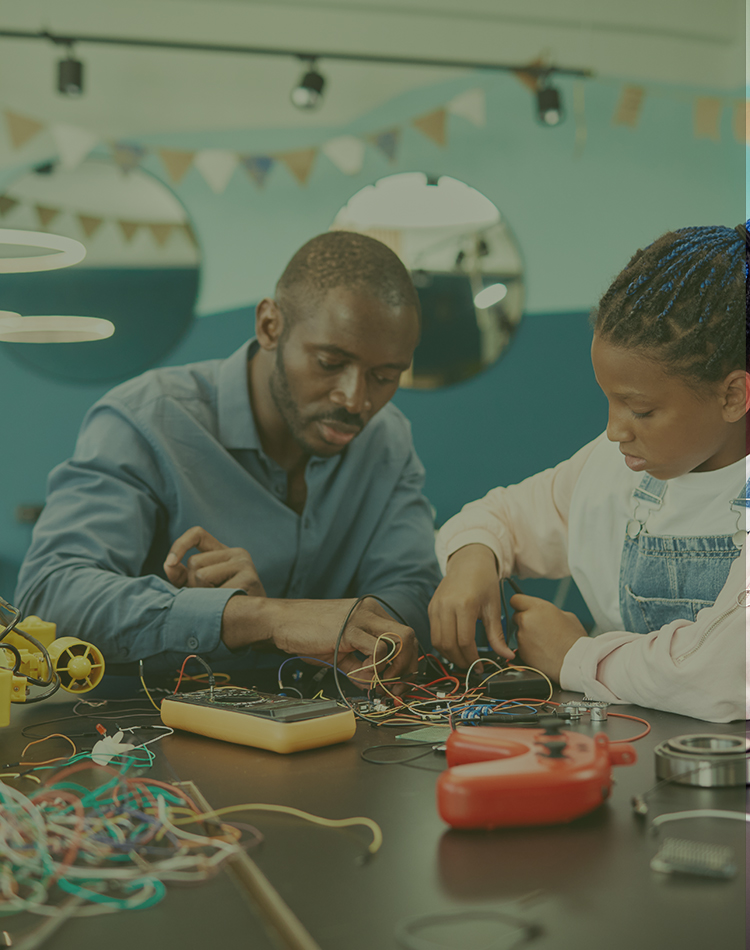
- STEM Education — Encouraging innovation and problem-solving through science and technology.
- Inclusive Education — Ensuring learners with disabilities and marginalized groups have equal access.
- Adult and Community Learning — Supporting lifelong learning, literacy and livelihood skills for adults.
Priority Areas
Early Childhood Development
Supporting strong foundations during the earliest years of life through community-based learning, caregiver engagement and school readiness initiatives.
Primary and Secondary Education
Improving access to quality learning through scholarships, school infrastructure, teacher development, digital learning resources and inclusive education initiatives.
Technical and Vocational Education (TVET)
Supporting vocational institutions and community-based training programmes that equip young people with practical skills aligned to labour market demands.
Example Investments
The Foundation may support initiatives such as:
- Scholarships and bursaries
- Classroom construction and rehabilitation
- School libraries
- Computer laboratories
- Digital learning platforms
- Teacher professional development
- Assistive technologies
- STEM clubs
- Community learning centres
- School leadership programmes
- Reading initiatives
- Girls’ education programmes
- Education in humanitarian settings
Expected Outcomes
Through these investments we expect to see:
- Increased school enrolment and retention
- Improved literacy and numeracy
- Better learning outcomes
- Higher completion rates
- Increased transition to higher education and vocational training
- Improved employability
- Greater educational equity
Digital Learning
Promoting digital literacy, technology-enabled education and equitable access to digital learning opportunities.
STEM Education
Increasing participation in science, technology, engineering and mathematics while encouraging innovation and problem-solving.
Inclusive Education
Ensuring learners with disabilities and other marginalized groups have equitable access to quality education.
Adult and Community Learning
Supporting literacy, financial education, entrepreneurship training and lifelong learning opportunities for adults.
Long-Term Impact
Communities benefit from better-educated citizens who possess the knowledge, skills and confidence to contribute to social and economic development